"There aren't any more movie stars, which is terrific with me,
it's very healthy. A lot of love now occurs in the business, people
helping each other to do good work, getting high on each other's
success. Isn't that great?"
She rose to prominence as part of a new wave of "actor's actors" changing Hollywood in the late 1960s and 1970s, but would later redefine herself as what is often referred to as a "scream queen". Yet that simple term unfairly reduces the contributions she made, both to mainstream film and the horror genre, over the course of her 45-year career. Karen Black was a one of a kind, and has inspired a devoted following which was saddened to learn that she had lost her three-year battle with ampullary cancer last Thursday at the age of 74.
Born Karen Blanche Ziegler in Park Ridge, Illinois, she took her stage name from first husband Charles Black, whom she married at the tender age of 16. The marriage would last only seven years, but she would keep the name for the rest of her career. And she was advanced for her age in more ways than this, as at the time of her marriage she was already a student at Northwestern University. However, she was bitten by the acting bug early, and dropped out of college to head to New York and Lee Strasberg's world famous acting studio at age 17.
She started appearing in a number of off-Broadway roles in her late teens and early twenties, and even had her first bit part on screen in 1959 in the exploitation flick The Prime Time, at the age of 20. By 1965, she had debuted on Broadway to acclaim in the short-lived critical darling The Playroom. The following year, she got her first major screen role in the early Francis Ford Coppola film, You're a Big Boy Now.
By the latter part of the 1960s, Black had begun to establish herself amongst a new generation of young and hungry actors, born of the Stanislavsky method and eager to turn Hollywood on its ear--actors like Dennis Hopper, Jack Nicholson, Robert De Niro, Dustin Hoffman and others. It would in fact be her 1969 appearance alongside Hopper, Nicholson and Peter Fonda in the groundbreaking biker opus Easy Rider that would truly introduce her to the world as a major star.
Black turned her heads with her self-named role, and followed it up the next year with another turn co-starring with Nicholson in Five Easy Pieces. This time, she earned an Oscar nomination, and the first of two Golden Globe awards she would receive in her career. Karen Black had become one of the most buzzworthy actresses of the new decade--a decade in which she would participate in changing the face of American film.
At the apex of her career in the 1970s, Karen Black got to star in Coppola's adaptation of The Great Gatsby alongside Robert Redford; The Day of the Locust with Donald Sutherland and Burgess Meredith; and Airport 1975, in which she became the infamous "stewardess flying the plane" that would inspire the title and theme of Ron Hogan's excellent book on '70s cinema.
She would also begin to dabble in the horror genre, beginning with the horror-tinged thriller The Pyx in 1973, but starting in earnest in late 1974, when she took a major role in the TV movie Trilogy of Terror--mainly because her second husband, Robert Burton, had landed a part. The two would be divorced by the time the movie aired, but Black's sojourn into the realm of the dark and bizarre had begun. She followed it up in 1976 with starring roles in Dan Curtis' Burnt Offerings with Bette Davis, and in Family Plot, the final film of Alfred Hitchcock.
Karen Black's career would never again reach the heights it did during the 1970s. And although she once again turned heads in 1982 with an appearance in Robert Altman's Come Back to the Five and Dime, Jimmy Dean, Jimmy Dean, by this point she had embarked on a different stage of her career--one that would wind up defining her for the next quarter century. Karen Black had become a so-called "scream queen"--yet her acting chops and legit training helped her stand out from the pack of '80s horror starlets. In truth, she was a cut above.
Her resume during the 1980s would include such movies as Tobe Hooper's Invaders from Mars remake and It's Alive III: Island of the Alive. By the 1990s, she had settled firmly into B-horror shlock territory--her films of that era include the likes of Children of the Corn: The Gathering and other obscure direct-to-video fare. It was a far cry from starring roles in Francis Ford Coppola and Robert Altman pictures, but she continued to work steadily and had found a niche for herself which endeared her to legions of fans like never before.
Black's most memorable role of the new century, and perhaps the part for which she is most known to younger horror fans, would come in 2003 thanks to horror aficionado Rob Zombie. A fan of the genre--particularly the '70s and '80s era of splatter and exploitation, Zombie had been a big fan of Black's work and decided to thrust her back into the horror mainstream along with other cult favorites in his debut picture, House of 1,000 Corpses. As the unforgettable Mother Firefly, Black was the best thing about the film, and it instantly reminded fans of just what a talent and a gift to the genre she truly was.
Nevertheless, House of 1,000 Corpses didn't quite lead to the full career resurgence fans of Black had been hoping for, and she continued to ply her trade in B cinema for the remainder of the decade, most notably in the 2011 underground horror comedy Some Guy Who Kills People.
However, by that point, Black had already been forced to curtail her career thanks to a diagnosis of ampullary cancer in 2010. Through surgery and treatment, she was able to beat it within months, but it returned aggressively last year, and on August 8, 2013, with fourth husband Stephen Eckelberry by her side, it claimed her life.
Although her career trajectory did not follow the same path as many of her compatriots from those exciting game-changing days of the late '60s and early '70s, in her own way Karen Black left a mark that will never be forgotten. She found a niche and a formula that worked, keeping her working and beloved by fans of horror and B-movies for decades.
All in all--a legacy most actors would kill for.
Pages
"QUITE SIMPLY, THE BEST HORROR-THEMED BLOG ON THE NET." -- Joe Maddrey, Nightmares in Red White & Blue
**Find The Vault of Horror on Facebook and Twitter, or download the new mobile app!**
**Check out my other blogs, Standard of the Day, Proof of a Benevolent God and Lots of Pulp!**
Monday, August 12, 2013
Tuesday, August 6, 2013
Random Ramblings from the Vault!

- Random Ramblings is back this week, and I'd like to kick it off by shouting to the rooftops how excited I am about the impending release of the long-pined-for restored version of Robin Hardy's The Wicker Man. Director Hardy had long lamented the seemingly permanent loss of 14 minutes of the film's footage due to a ridiculous studio bungle. Now that it's finally been found 40 years later, I can't wait to see Hardy's true, original vision at last.
- I've spent years educated my kids on the joys of horror, but till now have kept things relatively confined to the PG/PG-13 realm. I recently broke that edict with a screening of the brilliant '70s zombie chestnut Let Sleeping Corpses Lie (a.k.a. The Living Dead at Manchester Morgue). I'm proud to report that Zombelina and Skeleton Jack (ages 11 and 9) are alive, well and untraumatized. Like Luke Skywalker, they've taken their first step into a larger world.
- Is it just me, or has True Blood been improving this season? For me, the show has always seemed so erratic, going from interesting to unbearable at regular intervals. But I have to say, this season so far has captured my attention and seems to be getting back to more of what made the show so intriguing in the first place.
- As you might have been able to tell by the recent vlog here in the Vault, and elsewhere in Jack's Movie Town, I'm seriously on a Pacific Rim high this summer. I've now seen the film three times, and it's successfully washed away the taste of the horrendous Man of Steel and the slightly disappointing Star Trek: Into Darkness. If you haven't seen it yet--SEE IT. Word of mouth is spreading, and it now looks like a sequel may actually happen.

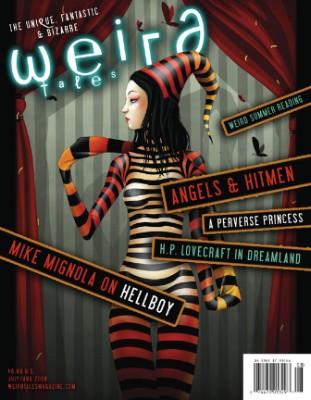
- Did you know that Weird Tales magazine is back in publication? Shame on you if you didn't. The classic old school horror pulp, which boasted such authors as H.P. Lovecraft and Robert E. Howard among its contributors, has been back for a little while now, and I strongly encourage you to support it. We need solid outlets for new horror short fiction, and I can think of no better home for it than the legendary Weird Tales.
- I always love putting together the Cyber Horror Awards, because it gives me a chance to catch up on the best horror films of the past year that I may have missed. This time, I'm taking some time to discover Lovely Molly, Sinister and Mother's Day...
- For many years, I've admired the amazing Alamo Drafthouse from afar. A theater that combines good movies with good food and drink, and also has genuine knowledge of film history and respect for the moviegoing experience? Count me in. Color me ecstatic at this month's brand new opening of an Alamo Drafthouse in Yonkers, New York, a mere 20 miles or so from me. And among their first screenings will be Stanley Kubrick's The Shining! I'll be heading down there very soon, you can count on that...
- For all you supporters of my Bedlam at the Bijou series, I just wanted to let you know that our run at that venue has ended after a glorious and very fun year. However, fear not--because I'm looking to take the Bedlam brand on the road and continue the coolness at a new location in Connecticut. Stay tuned for more updates on where and when you can expect to see vintage horror double-features in the mighty B-Sol manner.

- Captain Cruella's Village Invasion is returning with an amazing FOURTH annual installment in the town of Saugerties, nestled in New York's idyllic Hudson Valley. It's the Northeast's premiere zombie crawl event, and this year looks to be bigger and better than ever. Check it out at the official Village Invasion website, or stay tuned to Cruella's Crypt for more news and information!
Thursday, August 1, 2013
Better Late Than Never: Announcing the Nominees for the 5th Annual CYBER HORROR AWARDS
It all started four years ago as a novel idea... how interesting would it be to give the horror blogosphere a platform from which to praise the best in horror movies each year? Other critic-based movie awards exist out there, so what about one for online horror journalists--who happen to be among the most opinionated, vocal critics of them all? So I came up with the Cyber Horror Awards, taking advantage of the connections I had made in the online horror world to create a system that could be used to recognize greatness in horror cinema each year.
Each year, I reach out to a select group of notables to help me select nominees in 13 different categories. Once that's done, the official ballot is emailed to scores of online horror critics (this year that number reached nearly 150), both blogger and non-blogger alike, asking them to select their choices. And then, at long last, the winners are declared over at the official home of the Cyber Horror Awards. Needless to say, this is all happening a few months later this year than I'd normally like, but hey, sometimes real life can be a bit of a nuisance.
Speaking of the official CHA website, by going there you can check out the official list of this year's nominees, highlighting some of the best and brightest the horror genre had to offer in 2012. It's quite an interesting field this time out... In previous years, a single movie usually dominated the nominees: 2008 was the year of Let the Right One In; in 2009 it was Trick 'r Treat; 2010 was dominated by Black Swan; and last year it was Attack the Block. This year, however, there are three films which are running neck-and-neck: The Woman in Black, with 10 nominations; The Cabin in the Woods, with 11 nominations; and Prometheus, with a whopping 12 out of 13 nominations (all that was missing was Best Supporting Actor... poor Idris Elba.) The Innkeepers also made a significant showing with 6 nominations.
But enough jibber-jabber. To give you a taste, our nominees for the Val Lewton Award for Best Horror Film of the Year are:
- Prometheus
- The Cabin in the Woods
- The Woman in Black
- The Innkeepers
- Sinister
And now, I leave you with a handy guide to all the awards and their previous winners:
Val Lewton Award for Best Film
2011: Attack the Block
2010: Black Swan
2009: Trick 'r Treat
2008: Let the Right One In
David Cronenberg Award for Best Director
2011: Joe Cornish, Attack the Block
2010: Darren Aronofsky, Black Swan
2009: Michael Dougherty, Trick 'r Treat
2008: Tomas Alfredson, Let the Right One In
Jamie Lee Curtis Award for Best Actress
2011: Jodie Whittaker, Attack the Block
2010: Natalie Portman, Black Swan
2009: Isabelle Fuhrman, Orphan
2008: Lina Leandersson, Let the Right One In
Vincent Price Award for Best Actor
2011: Rutger Hauer, Hobo with a Shotgun
2010: Leonardo DiCaprio, Shutter Island
2009: Woody Harrelson, Zombieland
2008: Kare Hedebrant, Let the Right One In
Linnea Quigley Award for Best Supporting Actress
2011: Angela Bettis, The Woman
2010: Delphine Chaneac, Splice
2009: Lorna Raver, Drag Me to Hell
2008: Lizzy Caplan, Cloverfield
Dwight Frye Award for Best Supporting Actor
2011: John Goodman, Red State
2010: Vincent Cassel, Black Swan
2009: Bill Murray, Zombieland
2008: Vinnie Jones, The Midnight Meat Train
Curt Siodmak Award for Best Screenplay
2011: Joe Cornish, Attack the Block
2010: Mark Heyman, Andres Heinz & John McLaughlin, Black Swan
2009: Michael Dougherty, Trick 'r Treat
2008: John Ajvide Lindqvist, Let the Right One In
Karl Freund Award for Best Cinematography
2011: Hallvard Braein, Troll Hunter
2010: Matthew Libatique, Black Swan
2009: Anthony Dod Mantle, Antichrist
2008: Hoyte Van Hoytema, Let the Right One In
Albert S. D'Agostino Award for Best Production Design
2011: Roger Ford, Don't Be Afraid of the Dark
2010: Dante Ferretti, Shutter Island
2009: Steve Saklad, Drag Me to Hell
2008: David Hackl, Repo! The Genetic Opera
Bernard Herrmann Award for Best Score
2011: Tie: Joseph Bishara, Insidious / Steven Price, Attack the Block
2010: Clint Mansell, Black Swan
2009: Christopher Young, Drag Me to Hell
2008: Johan Soderqvist, Let the Right One In
Tom Savini Award for Best Makeup
2011: Sharon Toohey, Tucker & Dale vs. Evil
2010: Rick Baker, The Wolfman
2009: Greg Nicotero, Drag Me to Hell
2008: Greg Nicotero, Diary of the Dead / Mirrors
Ray Harryhausen Award for Best Visual Effects
2011: Troll Hunter
2010: Black Swan
2009: Coraline
2008: The Ruins
Molly Arbuthnot Award for Best Costume Design
2011: Ha Nguyen, Priest
2010: Milena Canonero, The Wolfman
2009: Magali Guidasci, Zombieland
Wednesday, July 24, 2013
Exorcist XL: Is Friedkin's Film Blasphemy or Reverence?
With the 40th anniversary of what is arguably considered the most frightening horror film of all time--and unarguably the most financially successful--my intention has been to celebrate that milestone all year. Much like I did with the 25th anniversary of A Nightmare on Elm Street in 2009, the 50th anniversary of Psycho in 2010, the 30th anniversary of An American Werewolf in London in 2011 and the 90th anniversary of Nosferatu in 2012. Alas, my schedule has made this more difficult than I originally planned, but at long last I'm able to sit down and put together the first of my "Exorcist XL" series, commemorating 40 years since the release of the first horror film to be nominated for Best Picture...
Growing up as a Roman Catholic, The Exorcist was a film that has filled me with dread for as long as I can remember. On the sidebar of this very blog, I recount the traumatic experience of first being exposed to it at the tender age of 8. It was a film that had an aura of the forbidden, and seemed in many ways to be the literal embodiment of evil. However, over time, I've come to the conclusion that--far from the unholy terror it has often been portrayed to be--The Exorcist is actually a very pious work. In fact, I'd go so far as to call it pro-Catholic propaganda. And that's coming from someone with the utmost admiration for the film.
I've heard religious individuals condemn The Exorcist as being the work of the Devil, and of being an immoral and irresponsible movie that devout Christians should avoid at all costs. Never mind the fact that, to my knowledge, the Roman Catholic Church (nor any major religious group, for that matter) never came out openly against the film in any way. In fact, the film even had the full participation of the Jesuit order, and even lent one of their brethren, Fr. William O'Malley (a licensed exorcist) to not only consult on the film, but to even appear on camera as the character Fr. Dyer, close friend of Damien Karras.
Why would this be the case, if The Exorcist were in fact a Satanic, anti-Catholic movie? If anything, it is quite the opposite. Within the world of The Exorcist, the priests are the good guys--they are soldiers of Christ. In fact, the movie is almost medieval in its thinking, casting the scientists as misguided, ineffectual and even actively negligent in their inability to help Regan during her plight. God and the Devil are quite real here, and only the disciples of God can be of assistance. Von Sydow's Fr. Merrin knows this to be true, and calmly dismisses more secular approaches.
One can even go so far as to interpret Regan's possession as a punishment for her mother's atheism--a belief system that in the world of this film leaves her without the ability to protect her daughter in any way. Chris MacNeil must go on a journey that forces her to confront the existence of traditional spirituality--much like Fr. Karras must struggle with his own loss of faith. It is only when Karras abandons his nihilism and embraces the empathetic virtue of self-sacrifice that he is finally able to find a true solution that separates Regan and the demon (although one can argue his selflessness is not necessarily religious but simply humanist in nature.)
Those who choose to avoid The Exorcist because they consider themselves good Catholics are missing the whole point. The movie may portray things that are considered hideous and obscene sacrilege, but these are depicted solely to demonstrate the work of the Devil in all its explicit evil. The movie does not take the demon's side--if anything, it is the men of God whom we are most encouraged to root for. Regan's revolting words and actions are shown simply to make the defeat of the demon that much more satisfying. And there is nothing seen that cannot also be found in actual reports of exorcisms performed by Catholic priests. I do not believe the film glorifies these elements, but rather uses them to establish the significance of the threat.
In short, the world of The Exorcist postulates that God and the Devil exist, that radical good and evil also exist, and that Christian spirituality is better equipped to combat evil than man's 20th century secularism. In other words, it is an extremely traditional film in theme and philosophy, and not the sordid, blasphemous work its opponents have often characterized it to be. In fact, I'd go so far as to speculate that the film can be interpreted as alarmingly archaic in its traditionalism, eschewing modern humanistic developments for a very black-and-white, fire-and-brimstone Old Testament version of reality. Far from being a Satanic work, it could easily have been based on an ancient or medieval fable, intended to keep potential stray believers on the straight and narrow.
The Exorcist may make the Devil seem cool, but don't forget that in the end the Devil loses--and it's the power of Christ that compels him.
Growing up as a Roman Catholic, The Exorcist was a film that has filled me with dread for as long as I can remember. On the sidebar of this very blog, I recount the traumatic experience of first being exposed to it at the tender age of 8. It was a film that had an aura of the forbidden, and seemed in many ways to be the literal embodiment of evil. However, over time, I've come to the conclusion that--far from the unholy terror it has often been portrayed to be--The Exorcist is actually a very pious work. In fact, I'd go so far as to call it pro-Catholic propaganda. And that's coming from someone with the utmost admiration for the film.
I've heard religious individuals condemn The Exorcist as being the work of the Devil, and of being an immoral and irresponsible movie that devout Christians should avoid at all costs. Never mind the fact that, to my knowledge, the Roman Catholic Church (nor any major religious group, for that matter) never came out openly against the film in any way. In fact, the film even had the full participation of the Jesuit order, and even lent one of their brethren, Fr. William O'Malley (a licensed exorcist) to not only consult on the film, but to even appear on camera as the character Fr. Dyer, close friend of Damien Karras.
Why would this be the case, if The Exorcist were in fact a Satanic, anti-Catholic movie? If anything, it is quite the opposite. Within the world of The Exorcist, the priests are the good guys--they are soldiers of Christ. In fact, the movie is almost medieval in its thinking, casting the scientists as misguided, ineffectual and even actively negligent in their inability to help Regan during her plight. God and the Devil are quite real here, and only the disciples of God can be of assistance. Von Sydow's Fr. Merrin knows this to be true, and calmly dismisses more secular approaches.
One can even go so far as to interpret Regan's possession as a punishment for her mother's atheism--a belief system that in the world of this film leaves her without the ability to protect her daughter in any way. Chris MacNeil must go on a journey that forces her to confront the existence of traditional spirituality--much like Fr. Karras must struggle with his own loss of faith. It is only when Karras abandons his nihilism and embraces the empathetic virtue of self-sacrifice that he is finally able to find a true solution that separates Regan and the demon (although one can argue his selflessness is not necessarily religious but simply humanist in nature.)
Those who choose to avoid The Exorcist because they consider themselves good Catholics are missing the whole point. The movie may portray things that are considered hideous and obscene sacrilege, but these are depicted solely to demonstrate the work of the Devil in all its explicit evil. The movie does not take the demon's side--if anything, it is the men of God whom we are most encouraged to root for. Regan's revolting words and actions are shown simply to make the defeat of the demon that much more satisfying. And there is nothing seen that cannot also be found in actual reports of exorcisms performed by Catholic priests. I do not believe the film glorifies these elements, but rather uses them to establish the significance of the threat.
In short, the world of The Exorcist postulates that God and the Devil exist, that radical good and evil also exist, and that Christian spirituality is better equipped to combat evil than man's 20th century secularism. In other words, it is an extremely traditional film in theme and philosophy, and not the sordid, blasphemous work its opponents have often characterized it to be. In fact, I'd go so far as to speculate that the film can be interpreted as alarmingly archaic in its traditionalism, eschewing modern humanistic developments for a very black-and-white, fire-and-brimstone Old Testament version of reality. Far from being a Satanic work, it could easily have been based on an ancient or medieval fable, intended to keep potential stray believers on the straight and narrow.
The Exorcist may make the Devil seem cool, but don't forget that in the end the Devil loses--and it's the power of Christ that compels him.
Monday, July 15, 2013
Faces of Fear: Vampires
Tonight we debut a brand new feature here in The Vault of Horror, in which we will spotlight various distinguished denizens of our nightmares. For our first edition, we take a look at what is perhaps horror's most iconic monster of all...
Saturday, July 13, 2013
VIDEO REVIEW! My Son and I Take on PACIFIC RIM, Guillermo del Toro's 21st Century Kaiju Masterpiece!
Direct from Jack's Movie Town, the movie review blog of my son Skeleton Jack (a.k.a. Wee-Sol), I give to you this very special video review of the film that single-handedly saved the summer of 2013 for me...
Thursday, May 30, 2013
What Might Have Been: Peter Cushing in the ‘70s (And Beyond)
One of the most iconic performers in the history of the horror film genre, Peter Cushing attained that iconic status thanks to a string of roles—mainly for legendary Hammer Films—during the 1950s and 1960s that saw him play the likes of Dr. Frankenstein, Dr. Van Helsing, Sherlock Holmes and others. A classically trained actor who played it much straighter during his earlier years in the 1930s and 1940s, Cushing will nevertheless always be remembered for the reputation he established as one of the true gentlemen of horror.
Nevertheless, after nearly 20 years as the face of British
terror, Cushing’s career took a step back in the 1970s. There are a few reasons
for this. One would be the death of his beloved wife Helen in 1971—a loss
that left him a shell of his former self for the remainder of his life. There
was also the fall of Hammer from its position of prominence into oblivion. For
much of the decade, the actor slummed it in roles that his fans and supporters
believed to be clearly beneath him. Even the role of the villainous Grand Moff
Tarkin in Star Wars, for which Cushing is perhaps best known by younger
audiences, was mainly undertaken by Cushing because he felt it would appeal to
children. Whatever the reasons for it, there is no doubt that Cushing’s 1970s
output was decidedly more erratic and of lower quality than the work that had
come before.
But it didn’t have to be that way. There are several
tantalizing “What Ifs” surrounding Cushing’s career during this period that are
enough to give any horror aficionado pause. The 1970s (and even 1980s) could
have played out very differently for him than they did, if only a few different
choices had been made.
In 1970, when American International Pictures was in
pre-production on a quirky, ambitious vehicle for Vincent Price, Cushing was
approached to play the chief protagonist alongside Price. Aside from Price, the
film starred an assortment of British character actors, and Cushing would’ve
been perfect heading up the bunch. It would’ve been a breakout role for
American audiences who knew him mainly for the British imports from Hammer.
However, Cushing’s wife Helen was very ill with the emphysema that would soon
claim her life, and the actor turned down the part in order to stay by her side
and care for her.
The film was The Abominable Dr. Phibes, and the role was
that of Dr. Vesalius, the noble foil to Price’s titular villain. American
Oscar-winner Joseph Cotten was eventually chosen for the part, and although he
is very effective in the finished film, his American-ness does make him stand
out like a sore thumb amongst the film’s cast (while Price was also American,
of course, his bearing and demeanor always helped him get away with it
somehow). The movie is easily one of the finest horror pictures of the entire
decade, and arguably better than any Hammer film put out during the same
period. There can be no doubt that Cushing’s presence alongside his fellow
horror icon Price would’ve only made it that much better.
![]() |
| Cushing as the ship's captain in Dr. Phibes Rises Again. |
Interestingly, Cushing—mere months after Helen’s
passing—would appear in the 1972 sequel, Dr. Phibes Rises Again, but in a tiny
role so unworthy of him one wonders why he was even cast. It would not be until
two years later that Cushing and Price would finally have the opportunity to
properly co-star with each other, in the Amicus production Madhouse. It would
be one of the only times.
Two years after Madhouse, wunderkind filmmaker George Lucas
was ramping his soon-to-be game-changing space opera Star Wars into production.
Although the cast would be made up largely of young unknowns, Lucas wanted two
British actors with established gravitas for two of the key roles—that of
wizened Jedi Knight Obi-Wan Kenobi, and of the evil galactic tyrant Grand Moff
Tarkin. Initially, the director approached Cushing for the role of Kenobi—but
presumably the actor’s horror track record and aristocratic, aloof on-screen
presence (a direct contrast to his warm, gentle personality in real life) led
Lucas to switch gears and instead cast him as the icy Tarkin. Fellow acclaimed
Englishman Alec Guiness was instead chosen to play the benevolent Kenobi.
Needless to say, had Cushing landed the part he was
originally approached for, he would’ve had the opportunity to appear in both
Star Wars sequels, The Empire Strikes Back and Return of the Jedi (as Guinness
did in the role), not to mention have his character reprised by a younger actor
in the later prequels (which Ewan McGregor did for Guinness). As it stands,
Cushing’s appearance in perhaps the most successful movie franchise of all time
is relegated to a one-time appearance that covers less than ten (albeit
memorable) minutes of screen time.
Star Wars raised Cushing’s profile with American audiences
higher than it had been in years, and hot on the heels of that
mega-blockbuster, Cushing was approached by another young upstart filmmaker by
the name of John Carpenter, hard at work on a project that was decidedly
grittier and less grandiose, and yet just as ambitious in its own right:
Halloween.
Carpenter was looking to redefine the parameters of horror,
taking some cues from earlier films like Psycho, but moving them in a
completely different direction. Nevertheless, it was a very small picture, and
no one understood at the time that he was basically inventing the modern
slasher subgenre. A rabid fan of 1950s and 1960s horror, Carpenter wanted
Cushing, one of his idols, for a key role in the film—that of Dr. Sam Loomis,
the beleaguered psychiatrist of psychopathic killer Michael Myers, who tracks
the maniac down to the sleepy town of Haddonfield, Illinois.
![]() | |
| The movie Cushing made instead of Halloween |
It was quite a meaty role, but Cushing nevertheless turned
Carpenter down. Perhaps the then-somewhat-sordid subject matter was the reason
for this, although that argument loses some steam when one realizes that
Cushing instead chose to star in a clunker called Son of Hitler. Incidentally,
a disappointed Carpenter next asked Cushing’s Hammer cohort Christopher Lee,
who also turned down the part—a decision he would later cite as the biggest
mistake of his career. The part instead went to another British character actor—and
former Bond villain—Donald Pleasance.
In the wake of Hammer’s demise, Halloween could have been
Cushing’s grand return to horror relevance. The film became one of the most
groundbreaking horror pictures not only of its time, but of all time, and
Cushing as Dr. Loomis would’ve been the most eloquent evolution of his old Van
Helsing character, a scientist tracking a ruthless murderer, taken to a whole
new, thoroughly modern level for a new generation of horror fans. It also
would’ve all but guaranteed repeat appearances for Cushing as Dr. Loomis in the
three Halloween sequels in which Pleasance instead appeared over the course of
the 1980s. That would’ve meant we’d have Peter Cushing front and center in a
top horror film series during an era when all his fellow former horror icons
had faded from prominence in the face of Freddy, Jason, Pinhead and their ilk.
Now that would’ve been something.
As it stands, we’re left only to speculate on the further
greatness Peter Cushing may have sustained in the 1970s and 1980s, and an alternate reality in which Cushing starred alongside Vincent Price in Dr. Phibes, played Obi-Wan Kenobi in the Star Wars movies, and was Michael Myers' mortal enemy. Clearly, it
just wasn’t meant to be, and the actor’s deep depression during those years is
reflected in both his lackluster roles and comparatively half-hearted
performances. Peter Cushing gave us all he had during his entire career—it’s
just sad that in those later years he had so little left to give. We’ll have to
be happy with the Peter Cushing of the 1950s and 1960s, at the height of his
powers, creating a breathtaking and unforgettable body of work. For most of us,
that’s more than enough.
This post is part of Pierre Fournier's Peter Cushing Centennial Blogathon, celebrating the 100th anniversary of the birth of one of horror's greatest treasures. Please check out Pierre's excellent blog Frankensteinia to find all the other posts in the blogathon!
Saturday, February 2, 2013
Wednesday, January 23, 2013
Hump-Day Harangue: Why Hammer Beats Universal (Almost) Every Time
As a fan of classic horror—by which I mean anything before
Romero’s zombies threatened the countryside and Rosemary had her baby—I’ve
often gotten caught up in that eternal debate: Which studio was superior, Universal
or Hammer? And by writing this, by no means do I want to denigrate one or the
other, or imply that one is subpar. Rather, both the Universal Studios output
of the 1930s/40s and the Hammer output of the 1950s/60s/70s represent high
watermarks in the history of horror. It’s just that, given the choice, I
usually go with Hammer.
That’s right, I’m choosing the Brits over my own countrymen.
Don’t get me wrong, I enjoy Universal’s iconic cycle of horror flicks, which
first introduced moviegoing audiences to the likes of Dracula, Frankenstein,
the Mummy, the Invisible Man, the Wolf Man and more. I just believe that by
reinvigorating the gothic genre in the era of radioactive monsters and
exploitation, Hammer did Universal one better and set the benchmark even
higher.
Let’s get one thing out of the way, first and foremost—in my
estimation, both James Whale’s Frankenstein and The Bride of Frankenstein are
superior to any film ever put out by the Hammer studio. That said, outside of
those two films, I generally find the Hammer body of work to be more enjoyable than
the Universal body of work. There are a number of reasons for this.
Maybe chief among them would be that Hammer represented my
original introduction to the horror genre. I like to think I’m not so prone to
such a subjective view, but I must at least entertain the possibility that I’m
biased. As a very small child, I first discovered what horror was all about
thanks to those weekend afternoon showings of Hammer gems on syndicated TV in
New York. Channels 5, 9 and 11 were my tutors in pop culture, and among the
gifts they gave me was Hammer. In fact, Hammer’s Lust for a Vampire may have
been the first horror movie I ever saw.
But beyond this mere nostalgia, there’s more. As time went
by and I came to discover Universal not long after, I also developed a strong
love for their brand of horror as well. But it never supplanted Hammer in my
heart.
Not to sound like a Philistine, but a large part of this had
to do with Hammer’s vibrant Technicolor. One of the main elements that the
studio itself took pride in was that it was reinventing these classic horror
tropes in a color medium, replacing Universal’s crisp black and white with the
garish, comic book-like hues never before seen in gothic cinematic horror. And
while generally I deplore the attitude that black and white is somehow
inferior, in this case—especially as a child—I was more drawn in by those bold,
almost shocking colors.
Needless to say, one of the main uses Hammer made of that
full color palette was to show blood. And by “blood” I mean some of the first
major instances of simulated bloodshed ever seen in horror movies, especially
of this kind. Whereas the Universal canon was more staid in its presentation,
leaving more to the viewer’s imagination (often due to constraints from the
Hayes Committee), Hammer let it all hang out, splashing the camera with more
bright red plasma than had ever been seen. This meant that instead of a
fangless Dracula (all due to respect to Bela Lugosi), we got a fanged and fierce
Christopher Lee, gore dripping from his lips, his eyes ringed in scarlet. For
an eight-year-old, literally the stuff of nightmares.
Hammer made a splash (pardon the pun) through their
then-liberal usage of blood, but they also became known for something else:
beautiful women. Although it may sound silly to harp on it, Hammer’s
unprecedented emphasis on sexuality was a big deal, and also helped usher
horror into a new era just as much as the blood did. The buxom and often exotic
women who populated Hammer’s films brought blatant sex appeal like never
before, in stark contrast to the often prim and buttoned-up sexuality
occasionally glimpsed in Universal. This is not to say that Universal horror
was not dealing with sexual themes, just that they did it in a much more
(necessarily) subtle and subtextual way, whereas Hammer—in typical studio
fashion—loved bashing you over the head with it.
Another aspect of Hammer that they often don’t get enough
credit for is the return of gothic horror to its proper Victorian roots.
Whereas Universal’s films often took place in some vague, unknown time period
that seemed like a confusing cross between modern times and the 19th
century, Hammer was careful to set its stories firmly in the Victorian era (or
earlier in some cases).
This worked especially for many of the tales, like Dracula
and Frankenstein, which were set in earlier time periods and were for the first
time being presented that way—but Hammer went much further than that. Perhaps
out of a sense of national pride in their own fabled history, they enjoyed
making nearly all their films period films, delighting in breathtaking costume
and set design that really gave you a sense of being in an earlier time. It
would be a new standard that would be copied by all gothic horror going
forward, right up until today.
In short, I think what makes Hammer my preferred source for
classic horror is that their output generally works better as horror films, if
that makes sense. While the Universal classics were usually more polished,
especially those of the 1930s, and were superior as films, Hammer’s work was
just downright scarier, with more of a flair for the horrific. While Universal
had fine filmmakers like Tod Browning and Whale, exceptional cinematography
from the likes of Karl Freund, brilliant set design from the likes of Russell
Gausman, and of course the writing of the great Curt Siodmak, Hammer answered
back with workhorse director and writer Terence Fisher and Jimmy Sangster,
meticulous costume designer Molly Arbuthnot and the blaring musical scores of
James Bernard.
While Hammer generally worked with a smaller budget, they
made you feel as if their productions were more lush. Universal may have been
more mainstream and high-profile, especially in the U.S., but Hammer made up
for their technical shortcomings with more of a genuine relish for horror. They
threw themselves into taking the groundwork laid by Universal and ratcheting it
up about five or six notches. And they were damn good at it.
So while I thoroughly enjoy my Karloff, Lugosi and Chaney
just as much as the next horror nut, my soul belongs, in the end, to Cushing
and Lee. Pressed to make a choice between Universal and Hammer, I’ll go with
Hammer. But it’s kind of like asking me to choose between Sinatra and the
Beatles, or Marvel and DC—I may go with the Chairman and the Board and the
House of Ideas, but that shouldn’t take anything away from my profound love for
the Fab Four and the Distinguished Competition as well. There’s room for all in
my horror-lovin’ heart.
And if you, like me,
enjoy a good Hammer flick—or two!—I urge you to join me tomorrow night in
Bridgeport for BEDLAM AT THE BIJOU: Hammer Horror, a unique double feature in
which I’ll be screening both Hammer’s version of The Mummy and the vastly underrated
Curse of the Werewolf! Plus, we’ve got Hammer DVD and book giveaways, and a
special appearance by the LoTTD’s own John Cozzoli of Zombos Closet of Terror!
Hope to see you there, Vault dwellers…
Tuesday, January 8, 2013
The Vault of Horror's Post-Holiday Gift Guide!
What, you may ask, is B-Sol doing putting out a gift guide now, a week after New Year's--and two weeks after Christmas? It's simple, really. There will be many of you, no doubt--myself included--for whom this time of year brings with it the promise of great generosity from our loved ones. Yes, it is indeed better to give than receive, and God bless those in our lives who also feel that way. Because if you're anything like me (which I hope, for you're sake, that you're not), then the days following Christmas find you burdened with the weight of gift cards and/or cold-hard cash bestowed upon you by those who hold you dear.
If you ask me, this is the time when a gift guide really comes in handy. You can hem and haw all you want about what to buy that special someone in your life, but what about when you actually find yourself flush with capital and eager to spend it on your life's one great passion: horror? Well, that's when you turn to your old buddy B-Sol, right here in The Vault of Horror. Because I'm about to regale you with a veritable cornucopia of self-gifting ideas designed to help make your post-Holidays retail therapy as beneficial as possible...
BOOKS
Cannibal Kitchen: A Horror Lover's Cookbook
If you're a longtime reader of horror website Brutal as Hell, then you're very familiar with the work of Shannon Rullo, whose "Slash and Dine" column on terror-themed culinary delights never failed to amuse. Slash and Dine later spun off into "Cannibal Kitchen", which led to what we have here--easily one of 2012's coolest horror-related books. Shannon's love of horror and cooking are both voracious, plus she's just a swell gal, period.
The Walking Dead: Compendium 2
The immense popularity of The Walking Dead TV series (it's the highest rated dramatic series in the history of cable television) has brought a new and fervent fan following to Image Comics' Walking Dead comic series upon which it's based. I checked out after issue #34, but I've always meant to go back and catch up. For those of you like me, Image has just put out the second in a series of mondo-sized reprint collections. This one covers graphic novel collections #9-16--or if you were one of those old souls who actually, you know, read the actual comics, that's issues #49-96.
11/22/63: A Novel
Leave it to Stephen King to make time travel this scary. Published earlier last year, this latest doorstop-sized tome from New England's favorite son is the tale of a man traveling back in time in an attempt to prevent the Kennedy assassination. My sister picked this one up for my dad for Father's Day last year, and the old man had nothing but rave reviews for it.
VIDEO
Baron Blood: Kino Classics Remastered Edition
Did I ever tell you how much I love Kino Video? Well, I love them. And this is just one more reason why. Added to the list of lost classics they've restored to home video is now the Mario Bava chestnet Baron Blood, starring the legendary Joseph Cotten and the delicious Elke Sommer. It's Bava returning to his gothic roots in a delightfully garish smorgasbord of technicolor that's a must-have for any fan of Italo-horror. It even has an audio commentary from Video Watchdog's Tim Lucas!
Godzilla vs. Biollante
Arguably the most popular of the Heisei Godzilla films at last gets its long-awaited release on DVD and Blu-Ray. Now you can glory in Big G battling a giant radioactive flower with the amazing picture and sound such a conflict deserves. And even though that sounds bitingly sarcastic, I actually mean it in all earnestness.
Paranorman
Easily one of the most fun genre releases of 2012, perhaps rivaled only by The Cabin in the Woods and Frankenweenie. I took the Captain and the kids AND my mom to this, and we all had a blast. Great to see such smart, dark humor make its way into a "family" film, not to mention the stunning stop-motion animation work we've come to expect from LAIKA, the studio that gave us Coraline in 2009.
The Gingerdead Man Trilogy
You read that right. For all of you who just can't get enough of everyone's favorite homicidal baked food product, now you have a chance to own all three films (there were three films??) in one magnificent box set. Get it for Gary Busey alone!
American Horror Story Season 1
The finest pure horror series to come down the pike in a very, very long time--and possibly the finest episodic horror series of all time, AHS is a gift-wrapped present to the entirety of horror fandom. I encourage anyone who hasn't discovered it yet to please do so. This is the first outstanding season, which aired in late 2011 and early 2012 on the FX cable network. If you want to find out what all the fuss is about, here's your chance.
VIDEO GAMES
Resident Evil 6
Capcom's juggernaut--which arguably launched the entire zombie renaissance of the 2000s, soldiers on with this latest installment. I'm not much of a gamer, but I will admit to a certain fondness for zombie fare like RE and House of the Dead. Available for PS3 and XBox.
Dead Island
Speaking of zombies, here's one that's been generating quite a bit of buzz since first hitting the scene a little over a year ago. Anytime there are zombies on a tropical island, only good things can ensue, as far as I'm concerned.
OTHER STUFF
Doctor Dreadful Zombie Lab
If your kids are anything like mine, they'll probably eat this up--literally. In a throwback to those classic morbid kid's food-making toys of the 1970s, this set allows little ones to make their own bubbling brains, eyeballs, barf, and a whole lot more--all edible, of course.
2013 Zombie Girl Calendar
Can you tell I like zombies? We might be a few days into the new year, but it's still not too late for a new calendar if you don't have one yet. And what better than 13 months of hot zombie chicks? Trust me, I'm a bit of an authority.
Arkham Horror
A stunning update to the classic 1987 original, this new edition of the acclaimed Lovecraftian board game/role playing game is well worth the wait. A bit pricey, but there are few games of this kind that are this downright cool in both concept and design.
There you have it, Vault dwellers. For those of you still holding on to cash presents and gift cards, I say happy hunting, and may you gift for yourself all the things you didn't get from anyone else. Even if you don't have any gift money to speak of, I think you might just find a few of these items a little too awesome to pass up. Enjoy the new year, horror fans!
If you ask me, this is the time when a gift guide really comes in handy. You can hem and haw all you want about what to buy that special someone in your life, but what about when you actually find yourself flush with capital and eager to spend it on your life's one great passion: horror? Well, that's when you turn to your old buddy B-Sol, right here in The Vault of Horror. Because I'm about to regale you with a veritable cornucopia of self-gifting ideas designed to help make your post-Holidays retail therapy as beneficial as possible...
BOOKS
Cannibal Kitchen: A Horror Lover's Cookbook
If you're a longtime reader of horror website Brutal as Hell, then you're very familiar with the work of Shannon Rullo, whose "Slash and Dine" column on terror-themed culinary delights never failed to amuse. Slash and Dine later spun off into "Cannibal Kitchen", which led to what we have here--easily one of 2012's coolest horror-related books. Shannon's love of horror and cooking are both voracious, plus she's just a swell gal, period.
The Walking Dead: Compendium 2
The immense popularity of The Walking Dead TV series (it's the highest rated dramatic series in the history of cable television) has brought a new and fervent fan following to Image Comics' Walking Dead comic series upon which it's based. I checked out after issue #34, but I've always meant to go back and catch up. For those of you like me, Image has just put out the second in a series of mondo-sized reprint collections. This one covers graphic novel collections #9-16--or if you were one of those old souls who actually, you know, read the actual comics, that's issues #49-96.
11/22/63: A Novel
Leave it to Stephen King to make time travel this scary. Published earlier last year, this latest doorstop-sized tome from New England's favorite son is the tale of a man traveling back in time in an attempt to prevent the Kennedy assassination. My sister picked this one up for my dad for Father's Day last year, and the old man had nothing but rave reviews for it.
VIDEO
Baron Blood: Kino Classics Remastered EditionDid I ever tell you how much I love Kino Video? Well, I love them. And this is just one more reason why. Added to the list of lost classics they've restored to home video is now the Mario Bava chestnet Baron Blood, starring the legendary Joseph Cotten and the delicious Elke Sommer. It's Bava returning to his gothic roots in a delightfully garish smorgasbord of technicolor that's a must-have for any fan of Italo-horror. It even has an audio commentary from Video Watchdog's Tim Lucas!
Godzilla vs. Biollante
Arguably the most popular of the Heisei Godzilla films at last gets its long-awaited release on DVD and Blu-Ray. Now you can glory in Big G battling a giant radioactive flower with the amazing picture and sound such a conflict deserves. And even though that sounds bitingly sarcastic, I actually mean it in all earnestness.
Paranorman
Easily one of the most fun genre releases of 2012, perhaps rivaled only by The Cabin in the Woods and Frankenweenie. I took the Captain and the kids AND my mom to this, and we all had a blast. Great to see such smart, dark humor make its way into a "family" film, not to mention the stunning stop-motion animation work we've come to expect from LAIKA, the studio that gave us Coraline in 2009.
The Gingerdead Man Trilogy
You read that right. For all of you who just can't get enough of everyone's favorite homicidal baked food product, now you have a chance to own all three films (there were three films??) in one magnificent box set. Get it for Gary Busey alone!
American Horror Story Season 1
The finest pure horror series to come down the pike in a very, very long time--and possibly the finest episodic horror series of all time, AHS is a gift-wrapped present to the entirety of horror fandom. I encourage anyone who hasn't discovered it yet to please do so. This is the first outstanding season, which aired in late 2011 and early 2012 on the FX cable network. If you want to find out what all the fuss is about, here's your chance.
VIDEO GAMES
Resident Evil 6
Capcom's juggernaut--which arguably launched the entire zombie renaissance of the 2000s, soldiers on with this latest installment. I'm not much of a gamer, but I will admit to a certain fondness for zombie fare like RE and House of the Dead. Available for PS3 and XBox.
Dead Island
Speaking of zombies, here's one that's been generating quite a bit of buzz since first hitting the scene a little over a year ago. Anytime there are zombies on a tropical island, only good things can ensue, as far as I'm concerned.
OTHER STUFF
Doctor Dreadful Zombie Lab
If your kids are anything like mine, they'll probably eat this up--literally. In a throwback to those classic morbid kid's food-making toys of the 1970s, this set allows little ones to make their own bubbling brains, eyeballs, barf, and a whole lot more--all edible, of course.
2013 Zombie Girl Calendar
Can you tell I like zombies? We might be a few days into the new year, but it's still not too late for a new calendar if you don't have one yet. And what better than 13 months of hot zombie chicks? Trust me, I'm a bit of an authority.
Arkham Horror
A stunning update to the classic 1987 original, this new edition of the acclaimed Lovecraftian board game/role playing game is well worth the wait. A bit pricey, but there are few games of this kind that are this downright cool in both concept and design.
There you have it, Vault dwellers. For those of you still holding on to cash presents and gift cards, I say happy hunting, and may you gift for yourself all the things you didn't get from anyone else. Even if you don't have any gift money to speak of, I think you might just find a few of these items a little too awesome to pass up. Enjoy the new year, horror fans!
Subscribe to:
Posts (Atom)