"A REALLY INTELLIGENT INTERVIEWER." -- Lance Henriksen
"QUITE SIMPLY, THE BEST HORROR-THEMED BLOG ON THE NET." -- Joe Maddrey, Nightmares in Red White & Blue

**Find The Vault of Horror on Facebook and Twitter, or download the new mobile app!**

**Check out my other blogs, Standard of the Day, Proof of a Benevolent God and Lots of Pulp!**


Saturday, December 31, 2011

Three Decades of David: The Man Behind the Wolf

I'm closing out 2011 with one last edition of Three Decades of David, my year-long celebration of the 30th anniversary of An American Werewolf in London. This time out, we take a look at the man who brought this visionary and influential horror film to life, and one of the most underrated directors in the entire horror canon, Mr. John Landis.

Known equally for his work in comedy and horror, Landis has been a fixture in Hollywood since the late 1970s, when he exploded onto the scene with National Lampoon's Animal House, the film that established him as a top filmmaker. Nevertheless, filmmaking had been a passion for the Jewish-born Chicago native since he was a small child absorbing in amazement the work of Ray Harryhausen in movies like The 7th Voyage of Sinbad.

In fact, it was 7th Voyage that first put the directing bug in the boy's head, as he started wondering exactly whose job it was to make movies, and if he could take part. So from the beginning, it was the fantastic and surreal that drew Landis to the world of directing, and that attitude would be reflected in much of his later body of work:
I had complete suspension of disbelief—really, I was eight years old and it transported me. I was on that beach running from that dragon, fighting that Cyclops. It just really dazzled me, and I bought it completely. And so, I actually sat through it twice and when I got home, I asked my mom, “Who does that? Who makes the movie?” - The Film That Changed My Life, by Robert K. Elder
Landis got his start as an assistant director in Yugoslavia on the 1970 war comedy Kelly's Heroes, and also spent some further time in Europe assisting on movies like El Condor and Sergio Leone's Once Upon a Time in the West.

His actual feature film debut came in 1971 at the age of 21, when he wrote and directed the low-budget monster movie tribute, Schlock. But most of the '70s were tough for the young Landis, as he tried to break into Hollywood, taking any odd job he could along the way. He got a major break in 1977 when he directed the Zucker brothers breakout Kentucky Fried Movie, but it was Animal House a year later that put him on the map.

It was that movie that pushed Landis into a vibrant creative circle that included hot directors like Steven Spielberg and many of the masterminds behind America's new cutting-edge sketch comedy series, Saturday Night Live. In fact, his next feature would be the first film to be adapted from an SNL skit, namely The Blues Brothers starring Dan Akroyd and John Belushi.

His name established as a comedy director, Landis at last felt comfortable delving into an area that had long been his passion: horror. When he got the word out that his next project would be a personal labor of love called An American Werewolf in London, a lot of people were surprised that the director of such happy-go-lucky, light-hearted fare was tackling such a supposedly heavy project. Little did they know how close to his heart the material was. Actually, the original concept came to Landis while working on Kelly's Heroes in Yugoslavia, when he witnessed some peasants burying a man suspected of being a werewolf.

For 12 years, Landis had nursed the AWIL project, and to this day it is considered by most to be his finest work. Deftly weaving black comedy and real horror in a way not quite seen before, Landis crafted a truly innovative, preeminently influential motion picture, one worthy of being called one of the greatest fright films of all time. Best of all, he brought his unique comic sensibility to the project, making it a movie that's pretty tough to compare to anything else.

Finally having broken through to the genre he cherished best of all, Landis continued on for a bit in the horror vein, joining forces with none other than Steven Speilberg to produce a movie based on the classic Rod Serling TV series, The Twilight Zone. Also directing a portion of the anthology film, Landis ran into some serious trouble that nearly derailed his career when famed actor Vic Morrow and two child extras were accidentally killed in a helicopter during filming. After a trial for involuntary manslaughter and child endangerment, Landis and company were acquitted of all charges, but the tragedy and controversy has haunted the producer/director to a certain degree ever since.

Regardless of the Twilight Zone debacle, the 1980s was something of a golden era for John Landis. He would go on to direct the most famous music video of all time, Michael Jackson's "Thriller", which is in and of itself something of a horror short subject. He then settled back into his comedy comfort zone for much of the decade, putting out fondly remembered '80s flicks like Trading Places, Spies Like Us, Three Amigos and Coming to America.
If the 1980s was a golden age for Landis, then his directorial career took a decided dip into silver or bronze territory in the 1990s. This was the decade that gave us the Sylvester Stallone turkey Oscar, and the ill-conceived Tom Arnold vehicle The Stupids. Even a return to the franchise that once brought him such acclaim resulted only in the completely forgettable Blues Brothers 2000. Similarly, Beverly Hills Cop III did nothing to change the trend.

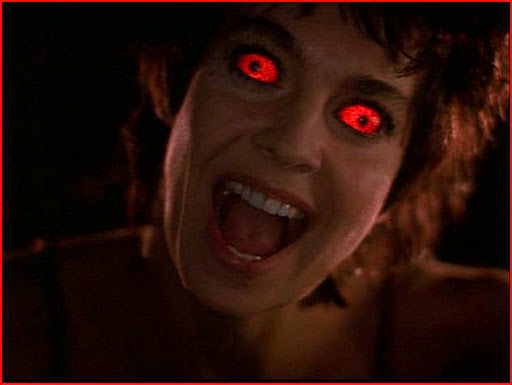
Although certainly not anywhere near the same ballpark as American Werewolf, Landis did make a brief return to horror in the 1990s with the vampire/gangster comedy Innocent Blood. While entertaining and possessing something of that Landis horror/comedy spark, it was a far cry from what the director had accomplished a decade prior.

Perhaps recognizing this downward trend, Landis shifted gears in the new century, turning to documentary filmmaking for much of the first decade. And now, the producer/director has reportedly shown interest in returning to the horror genre in the coming years, a rumor which is supported by his executive producing of last year's underground horror/comedy hit Some Guy Who Kills People.

Although his body of work can adequately be described as erratic, John Landis nevertheless deserves recognition as one of the brightest, visionary genre directors of his time. Just the achievement of An American Werewolf in London alone would be enough to afford him a fond remembrance in the hearts of horror and comedy fans. Add his successful SNL-alum comedies of the 1970s and 1980s, and you have a filmmaker who more than made his mark on his era.

Inspired by genre great Ray Harryhausen in that darkened theater, Landis grew to become a genre great himself.


Three Decades of David:

The Movie That Changed Werewolf Movies (And Horror!)
How the Dr. Pepper Pitchman Became a Horror Icon
The Music of An American Werewolf in London

Saturday, December 24, 2011

Making Christmas....

A very, very Merry Christmas from The Vault of Horror!!

Thursday, December 22, 2011

VAULTCAST EXCLUSIVE! Catching Up with Zacherley, the Cool Ghoul

I've got a special Christmas treat for you this week, kids. This is something I've been sitting on for quite a while now, so you must forgive me for the delay. But at last, the time has come.

Last spring, I made my usually annual sojourn to Chiller Theatre, this time with Captain Cruella, Zombelina and Wee-Sol all in tow. And we had the great luck of running into a true all-time legend of horror at that show--the one and only Zacherley, the iconic Northeast horror host whose famous broadcasts enthralled baby boomers for years.

Long the "mayor" of the Chiller Theatre convention, the 93-year-old Zacherley was proudly holding court that day in New Jersey, but gladly agreed to sit down and be interviewed for The Vault of Horror just a few days later. The following recording is the result of that interview, in which the old school horror host recounts all the details of his vast career, covering his years in radio and early TV, including the late-night movies that are still so fondly remembered by "monster kids" everywhere...

Listen to the interview on the embedded player below, or proceed to the official Vaultcast page and download it for listening later!

Monday, December 19, 2011

TRAILER TRASH! Christmas Edition, Book 2


And now...as a special holiday treat, I give you the vintage piece of Yuletide horror shlock, Christmas Evil, a.k.a. You Better Watch Out, featured in my October presentation on holiday-themed horror at Kevin Geeks Out. Enjoy it in its entirety--it's Ho-Ho-Horrible!!

Saturday, December 3, 2011

Random Ramblings from the Vault...

  • Has anyone ever noticed an unusual preponderance of mute female characters in Hammer films? I'm thinking the Brits must like their women silent. If anyone else has a better explanation, I'm all ears.
  • 'Tis the season to watch Christmas movies, and as I lay here taking in the classic It's a Wonderful Life on NBC, I can't believe I never noticed before how closely it resembles a feature-length Twilight Zone episode...albeit with a much more upbeat finale.
  • I've got to give a positive review to Troll Hunter, which I finally got the chance to see recently. A very interesting concept, although I take issue with the way in which the filmmakers felt the need to perpetuate the whole myth about trolls smelling the blood of Christian men, while scientifically debunking all other troll-related folklore. That seemed a bit incongruous. Still, all in all, an ingenious film I recommend highly.
  • I'm surprised that my recent Vault poll to determine the favorite Abbott & Costello horror comedy after A&C Meet Frankenstein resulted in A&C Meet the Killer, Boris Karloff as the winner. While I enjoy all their flicks, I just didn't think Bud & Lou were at their best in that one. Maybe it was because Karloff was such a minor player in the movie, but I personally find A&C Meet the Invisible Man, A&C Meet the Mummy, A&C Meet Dr. Jekyll & Mr. Hyde and Hold That Ghost! to all be superior.
  • Speaking of my second favorite comedy duo (sorry, but Laurel & Hardy rule all), a recent viewing of A&C's horror comedies got me thinking... Can you imagine if the boys were around today, and making movies like Abbott & Costello Meet Jason, or Abbott & Costello Meet Pinhead? I can see it now... "We will tear your soul apart!" "Ohhhhh CH-CHICK!!!"
  • It truly was a blissful experience hosting the one and only Psycho at the Avon Theatre in Stamford with Captain Cruella. As I said that night, Hitchcock's masterpiece is not just a mere cult horror classic, but one of the finest motion pictures ever made, period. It's one of those movies that's a joy to watch from beginning to end. Now I just need to get the Universal 50th anniversary DVD release...
  • I'd like to wish a belated happy 10th birthday to the VoH's cutest little correspondent, my dear little Zombelina. At her birthday party a couple weeks ago, I took it upon myself to entertain the pajama-clad fifth graders with a screening of the original House on Haunted Hill, my girl's favorite horror movie. Not a bad follow-up to last year's Brides of Dracula, wouldn't you say?
  • And speaking of pint-sized Vault of Horror contributors, I'm proud to say that my other progeny, Skeleton Jack, has at long last started up his very own blog, and I'd appreciate it if you went over and gave it a look. It's called Jack's Movie Town, and wouldn't you know it, his first two movie reviews are for horror flicks. I guess it's that whole apple/tree thing...
  • Captain Cruella and I were recently asked to be the subjects of a most interesting and evocative cemetery photo shoot in the wiles of Staten Island. Through the talents of photographer Laura Pennace, we were transformed into a couple of star-crossed ghostly lovers. Best of all, it gave me a chance to play dress-up, which I always appreciate. Take a gander at the full photo shoot right here...
  • It's almost the end of the year, which means it's already time to start thinking about the Cyber Horror Awards. Can you believe it? The first-ever horror movie awards voted on by online critics is now proudly entering its fourth year, and I'll be recruiting some judges to help me with nominations shortly. Then it goes out to all you blogger folk to vote on the best of 2011. Stay tuned, as nominations will probably be announced some time in early February...

Friday, December 2, 2011

Retro Review: The Evil of Frankenstein (1964)

I pride myself on being a great fan, admirer and aficionado of Hammer horror--in a lot of ways superior to Universal, if I may be so bold (although that's a debate for a future post). Ever since I was a child, I've been entranced by the technicolor blood, buxom wenches, uproarious scores and quaint period designs of the Hammer classics. And yet, one which I had never before seen was Freddy Francis' The Evil of Frankenstein, a 1964 chestnut which was the third of six films made in Hammer's Frankenstein series.

It's included on Universal's Hammer box set, which I've had for a number of years now and also includes such gems as The Curse of the Werewolf and Kiss of the Vampire. Yet, this particular one I had never seen before, although I had always wanted to. And over the Thanksgiving weekend, I finally took the opportunity. Although not the best of the Hammer series, and certainly not the best Frankenstein-inspired motion picture, I'm glad I took the time.

One of the reasons I had always been drawn to seeing this film is that it was a bit of a departure from the rest of the studio's Frankenstein franchise. Starting with The Curse of Frankenstein in 1957, Hammer had made it a point to reinvent the classic monster series, without relying on the elements that had made the Universal entries of the 1930s and 1940s so iconic. However, although part of the reason for this was undoubtedly creative innovation, another part was also legal necessity, as Hammer could not infringe upon Universal's intellectual property.

That changed with The Evil of Frankenstein, however. Whereas the previous two films, Curse of and Revenge of, had been distributed in the United States by Warner Bros. and Columbia Pictures, respectively, the third entry was actually picked up for distribution by Universal Studios itself, which meant that for the first time, Hammer had carte blanche to rely upon the devices used previously in Universal's own Frankenstein series. And so, the classic Jack Pierce monster design could be used, and the recognizable laboratory sets could be duplicated.

While an interesting notion, the result is a mixed bag. It's fascinating to see Hammer take a crack at the Universal approach, but in the end, what made Hammer's efforts so memorable is that the studio always strove to make its own mark rather than ape someone else's work. As it is, old reliable Hammer makeup man Roy Ashton is just not in his element trying to tread in the footsteps of Jack Pierce. What we get here is a second-rate copy of the traditional Boris Karloff square-headed, platform-shoe wearing Creature, here played by legendary New Zealand wrestler Kiwi Kingston, whose zombie-like performance can only conjure up a fraction of the pathos even Glenn Strange put forth in the Universal days, let alone Karloff. Similarly, Hammer art director Don Mingaye's sets are lush and intriguing as always, but are only doing what Charles D. Hall's revolutionary work did for Universal some thirty years prior.

The plot follows the trail of Dr. Frankenstein and his assistant Hans, as they attempt to put their financial situation back on track so the doctor can return to his life's work of reanimating the dead. When he returns to his ancestral home in the village of Karlstaad, he inexplicably discovers his original creation buried in ice underneath his property. Equally inexplicable is the fact that the Creature now looks nothing like the Christopher Lee version from the original, and instead suddenly resembles the Creature of the Universal Frankenstein series. The origin of the Creature is also retold in flashback, once again retconned to more resemble the Colin Clive/Boris Karloff origin sequence of the 1931 film. It's worth noting, however, that this is the only Hammer Frankenstein film other than the original to feature the actual Frankenstein monster--but it's also obvious that this was only done to take advantage of the license granted the studio by Universal.

Still, as with any Hammer production, there is a lot to recommend the film. Peter Cushing is excellent as always as the good Dr. Frankenstein, and I'll submit that his interpretation is probably the most textured, complex and compelling of anyone who has ever tackled the role. The great Peter Woodthorpe, known to many as the voice of Gollum in both the landmark BBC Lord of the Rings radio adaptation as well as the Ralph Bakshi animated version, is a delight as the alcoholic, unscrupulous carnival hypnotist Prof. Zoltan, the film's lead heavy. Studio head Anthony Hinds, writing as he typically did under the pen name John Elder, turns in a taut script that is up to snuff with his work on such favorites as The Brides of Dracula, Night Creatures and The Reptile.

The picture probably could have benefited from the directorial leadership of Hammer standby Terence Fisher, who was set to helm the film before being injured in a car accident. In his place, the project as handed over to his cameraman Freddy Francis. Francis had previously directed minor Hammer faves Paranoiac and Nightmare, and was far from a tested commodity when he took on The Evil of Frankenstein. He would go on to direct other minor Hammer pictures, with his most notable work being Dracula Has Risen from the Grave, and his best known film would have to be Amicus Pictures' 1973 adaptation of Tales from the Crypt.

As a die-hard Hammer fan, I will always welcome the chance to curl up on a dark night with one of their evocative, atmospheric and intense films, no matter if its one of their very best or a lesser-known effort. There's no doubt the original Curse of Frankenstein is the high watermark of Hammer horror, and The Evil of Frankenstein is but a shadow of that film. An enjoyable shadow, but a shadow nonetheless. Hammer still put out a horror flick well worth seeing, but the bottom line is that the studio made its name by charting its own course in horror, not following someone else's lead. The Evil of Frankenstein is an interesting experiment, if an ill-advised one.

Thursday, November 24, 2011

This Year... There Will Be No Leftovers.

Wednesday, November 23, 2011

Hump-Day Harangue: Did American Horror Story Really Go Too Far?

A few weeks ago, an editorial was run regarding American Horror Story on the very popular celebrity gossip blog Oh No They Didn't (yes, I already became annoyed due to the name of the site.) I immediately took interest, since FX's American Horror Story has held me as willing captive since it debuted the last month. You can read the article here, but the gist of it is that ONTD took AHS to task for the November 9 episode, in which a Columbine-style school shooting was depicted.

The reason for the taking-to-task was that apparently the show went "too far" in featuring such a starkly realistic and reality-based event. The author of the piece, who goes by the nome de blogue of Paris Dior Chanel, felt that it hit far too close to home, and was just too heavy for a show of this nature. Ms. Chanel believes that reality and horror really shouldn't mix, which immediately pegs her as someone who is just not very familiar with the horror genre. Particularly, she seems to find the show to be campy, silly fun which shouldn't get bogged down in real life:
American Horror Story is, despite all of its silliness and overly manufactured mood, an undeniably entertaining show. It's campy and creepy and doesn't seem to take itself too seriously, as it shouldn't. It's not the kind of horror thing that demands we imagine ourselves in the situation in order to be scared, which would require the show to exist at least somewhat within the bounds of the real... It's fun!
Now, I know "fun" horror. In fact, it's become my preference in recent years. I do not find American Horror Story to be "fun". Nor do I find it to be campy. In fact, I'd say one would have to be decidedly jaded and/or cynical to interpret the show in that fashion. Chanel seems to dismiss the show as disposable cotton candy entertainment.

In my estimation, American Horror Story is the best-written horror TV show to come down the pike in years. It's smart and thrillingly executed, filled with brilliant characterizations and real depth of feeling. It's the kind of horror show that is so well-written, in fact, that I think it would still work and be entertaining even if all the horror elements were removed. It is sinister, dark and challenging. True Blood is campy. AHS is not. Yes, Jessica Lange's Constance character does enter into camp territory in the grand tradition of former leading-women playing crazy old ladies in horror films (think Bette Davis and Piper Laurie), but that's about it. I think there may be some preconceived notions here on the author's part, perhaps owing to the fact that the show comes from the creators of Glee?

AHS is gritty, unflinching horror that delves into the human psyche and goes places we're not necessarily comfortable going. That's what it's supposed to do. It's not The Munsters. As such, it is will within the realm of acceptability for Ryan Murphy and company to incorporate real-life tragedy into the mix. As opposed to what Chanel asserts:
Was last night's opening scary? Of course. It was tense and awful. But it wasn't the right kind of scary for this dopey show. The chief (if perhaps initially unintentional on the creators' part) product of this show should be laughter... That's the kind of silly, ultimately empty scare that American Horror Story is best at. A school shooting is not that. That's far too real, far too much of a downer for a dumb Wednesday night.
Clearly, Chanel is viewing the show from a very different perspective from mine. So her opinion of the shooting storyline obviously draws from a very dismissive opinion of the show. If one considers AHS to be silly and dopey, than I suppose I can see how it would be out of sorts for truly disturbing material to be included. Yet I, and many others, find the show to be anything but silly, and its scares to certainly be anything but empty.

There's nothing dopey about botched abortions, mutilated babies, people burned alive and hit-and-run accidents. How about the home invasion and torture depicted in the opening of episode 2? Why did that fit Chanel's limited view of AHS, and not this? As for the scares, they come from places deep and dark; places like parents' fears over protecting their children, the anguish of secrets that won't stay hidden, and existential angst and insecurities common to us all. Empty? Campy fun? Are we watching the same show?

American Horror Story was well within its domain featuring a school shooting. Not only should Murphy and the gang not shy away from such subject matter, but I urge them to keep it coming. I can appreciate light-hearted horror, but that's not what AHS is. The show should remain true to itself, and keep challenging us. If I wanted silliness, I'd have gone to see the Abercrombie & Fitch vampires and werewolves at the movies last weekend.

Sunday, November 20, 2011

Three Decades of David: The Movie That Changed Werewolf Movies (And Horror!)

In 1981, the werewolf movie was dead in the water. Done and done. A curious relic of horror history. And then, along came John Landis' landmark An American Werewolf in London, and the game was immediately changed forever.

So much change was brought into being as a result of this movie, in fact, that we often may take it for granted and not fully appreciate the amount of evolution it lent the ailing subgenre. Let's take a look at just a few of the ways that An American Werewolf in London transformed lyncanthrope cinema--and along the way, the entire horror category.

FROM WOLF MAN TO MAN WOLF

Prior to AWIL, the movie werewolf was a curious creature, who was actually not very much of a wolf at all. Rather, as he was best described in the 1941 Lon Chaney Jr. classic, he was more of a "wolf man"--that is to say, a humanoid being with some of the more fearsome qualities of a wolf tacked on for horrific effect. This was not at all in line with the creature as described in traditional folklore, but it was necessitated by the level of makeup and special effects technology available in those early days of film.

It was a lot easier to take someone like Chaney or Henry Hull and add some lupine features--some fur and fangs, maybe a dog-like nose or ears. This is not to denigrate the work of such legends as Jack Pierce, but the fact remains that the werewolves depicted in movies prior to AWIL were much more man than wolf.

By the time we get to Landis' masterwork, and the contributions of that film's effects wizard, Rick Baker, we've got a whole different monster on our hands. For the first time, a werewolf was created that actually looked more like a monstrous wolf than a hairy dude in ripped clothes. The wolf we see here is not a true wolf like we would find in the natural world, but rather a demonic creature that is decidedly lupine in nature, but with a very cruelly human intellect behind its animalistic violence.

An American Werewolf in London stressed the wolf in werewolf, and set a trend that would be commonly followed in many other horror films. Sure, the "wolf man" template would still be replicated many times, but Baker demonstrated that it was possible for a human character to transform into a true wolf-like being.

DRAMATIC CHANGE... LITERALLY

Again, not to cast aspersions on the work of some of Hollywood's finest special effects geniuses, but what passed for a werewolf transformation on screen prior to An American Werewolf in London is very different from what audiences came to expect as a result of it. The time lapse photography work and other of Pierce's techniques seen in films like The Wolf Man and Werewolf of London were impressive for their time, and are still a hoot to watch, but remained within a boundary of what could be accomplished then--a boundary that would be shattered by Baker and company.

Starting with AWIL, the metamorphosis scene became something of a centerpiece of a werewolf film, the money shot that audiences waited for. It became a much more dramatic, intense, drawn out special effects extravaganza. David Naughton's transformation is an involved affair--a tense and nightmarish explosion of kinetic energy that is a far cry from Lon Chaney passively sitting in a chair as hair sprouted from his face.

It was also important to both Landis and Baker that the audience understand the pain involved in turning into a werewolf. Apparently, it hurts like hell to change into a monster--which would make sense, although it should be pointed out that the original folklore stresses the transformation as magical and not physical, thus no real pain. Still, thanks to the efforts of Landis and Baker, we get a sense of every cracking bone, popping sinew and contorting limb. The modern werewolf is thus a strange cross-breed of the enchanted and the biological.

WEREWOLVES AND POST-MODERNISM

From very early on, we understand that the characters in An American Werewolf London live in a world with all the same references we have. All the werewolf movies we know and love exist in this world; everyone knows the rules. References to movies such as The Wolf Man are made throughout the film, and in fact David explains how Larry Talbot had to be killed by his own father--someone who loved him--foreshadowing his own end at the hands of his girlfriend Alex.

A decade and a half before Scream, and nearly a quarter of a century before Shaun of the Dead, AWIL gave us post-modern irony in horror. We have characters who know the score--unlike characters from earlier horror flicks, who seem to live in a plastic bubble in which horror flicks don't exist. This self-referential style may be the single most influential contribution that An American Werewolf in London made to the history and development of the horror genre.

Not just one of the greatest horror movies ever made, An American Werewolf is smart horror. It turned its own subgenre and the entire genre on its head, and we've been feeling the effects ever since. It revived the werewolf for decades to come, giving it a whole new spin and a literal rebirth in the process. How fitting, that a concept based largely on the theme of transformation would be so profoundly transformed.

Wednesday, November 16, 2011

VAULTCAST! Exclusive Interview w/Best-Selling Dark Fantasy & Paranormal Fiction Writer Leanna Renee Hieber!

About a year ago, I had the distinct pleasure of meeting one of the true rising stars of dark fantasy and paranormal fiction, novelist Leanna Renee Hieber, through a mutual friend, KT Grant of the superb blog Babbling About Books and More. Since then, I've wanted to have her as a guest in the Vaultcast, and I finally did so just a few weeks ago. The result is posted here for your enjoyment, and I apologize in advance for getting it posted so late. Alas, such is the dilemma of a hyper-busy Vault Keeper.

Known for her Strangely Beautiful series, which has already been optioned as a musical theatre production, Ms. Hieber is now launching a brand new series that is sure to soon be the talk of dark fantasy and gothic young adult fiction circles: Magic Most Foul. Steeped in a deep appreciation of history and literature, she is a genre writer who is refreshingly proud of being a genre writer, and it was a real treat speaking with her.

So listen in as we chat about her work, as well as various literary and cultural non-sequiturs along the way. You can either listen on the embedded player below, or proceed to the Vaultcast page and download it for listening at your leisure...


Pre-order signed copies of Darker Still: A Novel of Magic Most Foul!

Leanna Renee Hieber's website

Leanna Renee Hieber on Facebook

Leanna Renee Hieber on Twitter
Related Posts Plugin for WordPress, Blogger...