
Showing posts with label director. Show all posts
Showing posts with label director. Show all posts
Thursday, August 9, 2012


Saturday, December 31, 2011
Three Decades of David: The Man Behind the Wolf

 I'm closing out 2011 with one last edition of Three Decades of David, my year-long celebration of the 30th anniversary of An American Werewolf in London. This time out, we take a look at the man who brought this visionary and influential horror film to life, and one of the most underrated directors in the entire horror canon, Mr. John Landis.
Known equally for his work in comedy and horror, Landis has been a fixture in Hollywood since the late 1970s, when he exploded onto the scene with National Lampoon's Animal House, the film that established him as a top filmmaker. Nevertheless, filmmaking had been a passion for the Jewish-born Chicago native since he was a small child absorbing in amazement the work of Ray Harryhausen in movies like The 7th Voyage of Sinbad.
In fact, it was 7th Voyage that first put the directing bug in the boy's head, as he started wondering exactly whose job it was to make movies, and if he could take part. So from the beginning, it was the fantastic and surreal that drew Landis to the world of directing, and that attitude would be reflected in much of his later body of work:
I had complete suspension of disbelief—really, I was eight years old and it transported me. I was on that beach running from that dragon, fighting that Cyclops. It just really dazzled me, and I bought it completely. And so, I actually sat through it twice and when I got home, I asked my mom, “Who does that? Who makes the movie?” - The Film That Changed My Life, by Robert K. Elder
 Landis got his start as an assistant director in Yugoslavia on the 1970 war comedy Kelly's Heroes, and also spent some further time in Europe assisting on movies like El Condor and Sergio Leone's Once Upon a Time in the West.
His actual feature film debut came in 1971 at the age of 21, when he wrote and directed the low-budget monster movie tribute, Schlock. But most of the '70s were tough for the young Landis, as he tried to break into Hollywood, taking any odd job he could along the way. He got a major break in 1977 when he directed the Zucker brothers breakout Kentucky Fried Movie, but it was Animal House a year later that put him on the map.
It was that movie that pushed Landis into a vibrant creative circle that included hot directors like Steven Spielberg and many of the masterminds behind America's new cutting-edge sketch comedy series, Saturday Night Live. In fact, his next feature would be the first film to be adapted from an SNL skit, namely The Blues Brothers starring Dan Akroyd and John Belushi.
His name established as a comedy director, Landis at last felt comfortable delving into an area that had long been his passion: horror. When he got the word out that his next project would be a personal labor of love called An American Werewolf in London, a lot of people were surprised that the director of such happy-go-lucky, light-hearted fare was tackling such a supposedly heavy project. Little did they know how close to his heart the material was. Actually, the original concept came to Landis while working on Kelly's Heroes in Yugoslavia, when he witnessed some peasants burying a man suspected of being a werewolf.
 For 12 years, Landis had nursed the AWIL project, and to this day it is considered by most to be his finest work. Deftly weaving black comedy and real horror in a way not quite seen before, Landis crafted a truly innovative, preeminently influential motion picture, one worthy of being called one of the greatest fright films of all time. Best of all, he brought his unique comic sensibility to the project, making it a movie that's pretty tough to compare to anything else.
Finally having broken through to the genre he cherished best of all, Landis continued on for a bit in the horror vein, joining forces with none other than Steven Speilberg to produce a movie based on the classic Rod Serling TV series, The Twilight Zone. Also directing a portion of the anthology film, Landis ran into some serious trouble that nearly derailed his career when famed actor Vic Morrow and two child extras were accidentally killed in a helicopter during filming. After a trial for involuntary manslaughter and child endangerment, Landis and company were acquitted of all charges, but the tragedy and controversy has haunted the producer/director to a certain degree ever since.
Regardless of the Twilight Zone debacle, the 1980s was something of a golden era for John Landis. He would go on to direct the most famous music video of all time, Michael Jackson's "Thriller", which is in and of itself something of a horror short subject. He then settled back into his comedy comfort zone for much of the decade, putting out fondly remembered '80s flicks like Trading Places, Spies Like Us, Three Amigos and Coming to America.
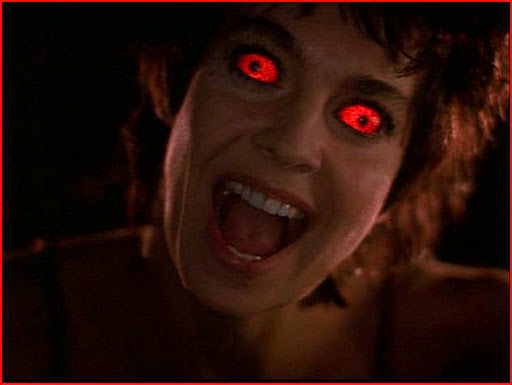 If the 1980s was a golden age for Landis, then his directorial career took a decided dip into silver or bronze territory in the 1990s. This was the decade that gave us the Sylvester Stallone turkey Oscar, and the ill-conceived Tom Arnold vehicle The Stupids. Even a return to the franchise that once brought him such acclaim resulted only in the completely forgettable Blues Brothers 2000. Similarly, Beverly Hills Cop III did nothing to change the trend.
Although certainly not anywhere near the same ballpark as American Werewolf, Landis did make a brief return to horror in the 1990s with the vampire/gangster comedy Innocent Blood. While entertaining and possessing something of that Landis horror/comedy spark, it was a far cry from what the director had accomplished a decade prior.
Perhaps recognizing this downward trend, Landis shifted gears in the new century, turning to documentary filmmaking for much of the first decade. And now, the producer/director has reportedly shown interest in returning to the horror genre in the coming years, a rumor which is supported by his executive producing of last year's underground horror/comedy hit Some Guy Who Kills People.
 Although his body of work can adequately be described as erratic, John Landis nevertheless deserves recognition as one of the brightest, visionary genre directors of his time. Just the achievement of An American Werewolf in London alone would be enough to afford him a fond remembrance in the hearts of horror and comedy fans. Add his successful SNL-alum comedies of the 1970s and 1980s, and you have a filmmaker who more than made his mark on his era.
Inspired by genre great Ray Harryhausen in that darkened theater, Landis grew to become a genre great himself.
Three Decades of David:
The Movie That Changed Werewolf Movies (And Horror!)
How the Dr. Pepper Pitchman Became a Horror Icon
The Music of An American Werewolf in London
Thursday, September 29, 2011
VAULTCAST! Interview w/Tom Six & Laurence Harvey, Director & Star of THE HUMAN CENTIPEDE 2!
 It's the most talked-about horror film of 2011, and I've got an interview with the men both behind and in front of the camera. The Human Centipede II (Full Sequence) has already been banned in a few countries, and has been making quite a stir, so it was impossible to pass up an opportunity to chat with director Tom Six and star Laurence Harvey (who sounded so nice and loveable with his gentle Liverpool accent that I couldn't match up the voice with the monstrous character he plays in the film).
I'll reserve my opinions for my upcoming review of the movie (keep checking Babbling About Books, and More, where I also reviewed the first film,) but for now, let's all enjoy this little chat with Tom Six and Laurence Harvey (my apologies for the occasionally shoddy audio.) Feel free to listen in on the embedded player below, or proceed to the Vaultcast page, where you can download it for later!
Wednesday, July 27, 2011
VAULTCAST! Conversations in the Dark: Pax Romano
 He's one of horror's most political and outspoken filmmakers. Over the past 45 years, George Romero has given us a body of work unlike anyone else in the genre. Along the way, he's become a Hollywood outsider, doing things his way--or at least trying his best to.
 To discuss Romero and his work, I brought on a blogger whom I've admired for some time now, the masked and mysterious Pax Romano of Billy Loves Stu. A fellow Romero fan and zombie lover, Pax was a whole lot of fun to have on Conversations along with me and my very own zombie companion, Captain Cruella. We get into everything from the Living Dead flicks to Martin, Creepshow and all points in between (not to mention a brief but entertaining non sequitur into the world of horror porn parodies...)
So listen in on the embedded player below, or proceed to the Vaultcast page and download for listening at your leisure!
Blog: http://billylovesstue.blogspot.com
Friday, December 17, 2010
Jean Rollin 1938-2010
 In the pantheon of horror directors, there are those whose names only become known to a relatively small yet fervent cult of followers. There are also those whose work transcends the narrow category in which it would seem to have been relegated--it becomes much more than that, especially to those in the aforementioned group. Jean Rollin was one of these. Controversial, possibly misunderstood, yet always intriguing; he and his work have long fascinated fans of exploitation horror. Yet now, it is only his work that remains, as Jean Rollin himself passed away Wednesday at the age 0f 72, after a long illness.
I first came across his work the way I think many fans did, via the bizarre yet beautiful 1978 zombie flick The Grapes of Death--known in his native France as Les Raisins de la Mort. Unusual, beguiling, and rightfully described by many as dreamlike, it remains in my opinion one of the all-time underrated horror films. There is much of Argento in it, or perhaps it is more accurate to say that there is some Rollin in much of Argento's work. I will not endeavor here to put him in the same category as the Italian master of the giallo, but he certainly deserves a lot more credit than he really got.
 Of course, much of the Rollin stigma derived from the subgenre of what some might call "Euro-sleaze" that he spent much of his career working in. Softcore (and in some cases, even hardcore) pornography, mixed with horror, is certainly not everyone's cup of tea--especially amongst the mainstream movie-going public (at least in what they'd comfortably admit). Rollin was not always picky with what he worked on, only that he kept working. But we can forget titles like Sodomania or Anal Madness (although that's undeniably a hard title to forget), thanks to memorable films like Fascination (1979), Demoniacs (1973), Lips of Blood (1974), and of course, Living Dead Girl (1982).
 "Euro-sleaze" though much of it may be, one cannot deny that it transcends such a limiting stigma. There is true eroticism to his work, mixed with creeping terror, and he achieves a somnambulistic sublimity on occasion that even the most jaded critic would have to acknowledge. While he may not have been among the giants of horror cinema, it is also not hard to understand why his work has accumulated such a loyal following. You will simply not find films like Grapes of Death being made today, and that is a real shame.
Rollin was passionate about film, looking for any way into the business, even going back to his teenage years in France during the 1950s. By age 15, he was writing screenplays, and by 16 he had already taken his first job doing menial work for a local studio. This led him eventually to directing--first documentaries and industrial films, and finally telling the stories he wanted to tell.
 He began his sojourn into horror in 1968 with The Rape of the Vampire, already setting the tone for the rest of his career, blending sexuality and the macabre with aplomb. And yes, as the years wore on, he began to take on more questionable projects, veering beyond the erotic and into the pornographic, which he admitted arose sheerly out of the need to keep working. And so work he did, and he can hardly be faulted for that. The man continued making movies right through the 1990s, and was in the midst of a comeback as of late that include The Night of the Clocks (2007) and the forthcoming Mask of Medusa.
We've lost one of the most interesting figures in the history of European horror this week. I will always identify him with The Grapes of Death first and foremost, as I think many American fans might--and I encourage anyone who hasn't seen it to honor the memory of Jean Rollin by checking it out. It really is one of the most unique films in the entire zombie subgenre, and will give you a greater understanding of the man whose work must now live on in his place.
Tuesday, May 4, 2010
VAULTCAST: Interview with The Commune Writer/Director/Producer Elisabeth Fies
 Elisabeth Fies' The Commune has been the talk of the blogosphere of late, and so it was only a matter of time before I got an opportunity to see the film. Having done that, I invited the woman behind the movie to enter the Vault and discuss her work. And since she is a feminist-minded filmmaker and fellow horror geek, it was inevitable that we would also touch on female perspectives in the horror genre as a whole.
Ms. Fies is a remarkably open and insightful person, who has been more than accessible to the online community, with recent interviews in places like Planet of Terror and Horror Society, and even a guest post on Kindertrauma. The Commune has been reviewed at places like Day of the Woman, From Midnight with Love, Fatally-Yours and Pretty-Scary. She was also recently nominated for the Golden Cob Award in the category of Best Emerging Director.
You can partake of the interview below, head to the Vaultcast page, or download it directly right here.


Official website: http://www.thecommunemovie.com/
The Commune on Facebook
Elisabeth Fies on Twitter
Thursday, March 11, 2010
The Many Faces of Alfred Hitchcock
"Where's Alfred?": Hitch Cameo Edition!
 The 39 Steps (1935)
 The Lady Vanishes (1938)
 Lifeboat (1944)
 Stage Fright (1950)
 The Trouble with Harry (1955)
 Psycho (1960)
 The Birds (1963)
 Marnie (1964)
 Torn Curtain (1966)
 Topaz (1969)
 Frenzy (1972)
 Family Plot (1976)
Immense thanks go out to Andre "Don't Call Me Alexandre" Dumas of The Horror Digest for both suggesting this idea, and arduously collecting all the DVD screen grabs! Please visit her blog immediately and often, and comment vigorously.
* * * * * * * * * *
And on a side note, Day of the Woman's BJ-C and myself were featured guests last night on the premiere edition of Heidi Martinuzzi & Stacie Ponder's new podcast, The Scare-ening! Take a listen here and partake in the hilarity.
* * * * * * * * * *
And on a side note, Day of the Woman's BJ-C and myself were featured guests last night on the premiere edition of Heidi Martinuzzi & Stacie Ponder's new podcast, The Scare-ening! Take a listen here and partake in the hilarity.
Thursday, February 18, 2010
VAULTCAST: Conversations in the Dark... w/Matt-Suzaka
 After a two-week hiatus, Conversations of the Dark returns in a big way, with Matt-Suzaka of Chuck Norris Ate My Baby! This time out, we're talking about a difficult, painful subject for horror fans: directors who were once great but have arguably lost their way... From Romero and Argento to Craven and Hooper, we pull no punches as we dissect their respective declines. Plus, poor Matt has been a bit under the weather, so his sick voice is sure to inspire your sympathy/cause you to gloat maliciously!
Listen in on the embedded player below, proceed to the actual Vaultcast page, or download the whole thing right here...

Friday, December 18, 2009
Dan O'Bannon 1946-2009
"A writer can't scare a reader unless that writer scares himself or herself first. So, you can't excite anyone in the audience unless you're excited writing the script! You're taking yourself for a ride before you take the audience for a ride!"
 If you're not instantly familiar with the name Dan O'Bannon, you should be. This is the man who wrote Alien--not just a great sci-fi/horror film, but the sci-fi/horror film. This is the man who wrote and directed The Return of the Living Dead, not just a great horror comedy, but the horror comedy. The same man is responsible for both of these absolutely pivotal movies/franchises. Oh yeah, and he also wrote the scripts for Lifeforce and Total Recall, just in case his resume needed a little extra boosting.
And now, the man who did all those things is no longer with us, having passed away last night after a short illness at the sadly young age of 63.
 From a personal perspective, I can tell you that were it not for ROTLD, I very well might not be the horror fanatic I am today. As a kid, I already had a solid grounding in Universal and Hammer, but it was O'Bannon's brilliant zombie comedy that put me over the top as an obsessed lifelong fan of the macabre. Without Dan O'Bannon, there might very well have been no Vault of Horror. Less than a fraction of a drop in the bucket in the grand scheme of things, to be sure--but I thank him for that.
O'Bannon had a somewhat sparse career, but what he chose to be associated with over the years is so impressive. Definitely a case of quality over quantity. He went to USC with none other than John Carpenter, collaborating with him on both of their debuts, the sci-fi comedy Dark Star (1974). He was on board for the earliest days of George Lucas' Industrial Light & Magic--you know those computer-generated Death Star blueprints, and the stop-motion game pieces Chewie & R2 use in Star Wars? Yeah, he worked on that.
He was also a writer of science fiction and horror in print as well as film, contributing occasionally to the landmark illustrated magazine Heavy Metal. In fact, two of his stories were adapted in the 1981 Heavy Metal movie, including the one about zombie pilots in World War II (figures!). In the '70s, he was attached as a writer to one of the most legendary cinematic missed opportunities, Alejandro Jodorowsky's adaptation of Dune. Although the project never happened, it did acquaint O'Bannon with H.R. Giger, the man who would design the title character of his most famous script.
 What came out of the failed Dune for O'Bannon was the chance to script what would become Ridley Scott's masterpiece, Alien. So I guess we can't be too disappointed. You don't need me to tell you what a brilliant screenplay O'Bannon crafted for that picture, one whose influence continues to be felt to this day. He took the established haunted house/slasher motifs, and bonded them to a sci-fi template in a way no one had before. The closest prior comparison might be Forbidden Planet, but that was obviously pre-slasher. In the wake of Star Wars, he showed us the darker, grimmer side of sci-fi.
 Nor do you need me to tell you what a minor miracle he pulled off with ROTLD. A movie called The Return of the Living Dead, based on a half-cocked attempt by John Russo to capitalize on the cult popularity of his previous work with George Romero, had no right whatsoever to be any good at all. Yet once O'Bannon took over, in his one great directorial turn, he transformed it into what I can say in all confidence is a terrific piece of film-making, justly revered among genre fans, but worth a look for any lover of film. It's a solid piece of work that gets better every time I watch it. Hell, it was so good it totally overshadowed Romero's own Day of the Dead, which came out at the same time!
So I'll be remembering Dan O'Bannon today, one of the key people who made me the fan I am. I hope you will, too.
 If you're not instantly familiar with the name Dan O'Bannon, you should be. This is the man who wrote Alien--not just a great sci-fi/horror film, but the sci-fi/horror film. This is the man who wrote and directed The Return of the Living Dead, not just a great horror comedy, but the horror comedy. The same man is responsible for both of these absolutely pivotal movies/franchises. Oh yeah, and he also wrote the scripts for Lifeforce and Total Recall, just in case his resume needed a little extra boosting.
And now, the man who did all those things is no longer with us, having passed away last night after a short illness at the sadly young age of 63.
 From a personal perspective, I can tell you that were it not for ROTLD, I very well might not be the horror fanatic I am today. As a kid, I already had a solid grounding in Universal and Hammer, but it was O'Bannon's brilliant zombie comedy that put me over the top as an obsessed lifelong fan of the macabre. Without Dan O'Bannon, there might very well have been no Vault of Horror. Less than a fraction of a drop in the bucket in the grand scheme of things, to be sure--but I thank him for that.
O'Bannon had a somewhat sparse career, but what he chose to be associated with over the years is so impressive. Definitely a case of quality over quantity. He went to USC with none other than John Carpenter, collaborating with him on both of their debuts, the sci-fi comedy Dark Star (1974). He was on board for the earliest days of George Lucas' Industrial Light & Magic--you know those computer-generated Death Star blueprints, and the stop-motion game pieces Chewie & R2 use in Star Wars? Yeah, he worked on that.
He was also a writer of science fiction and horror in print as well as film, contributing occasionally to the landmark illustrated magazine Heavy Metal. In fact, two of his stories were adapted in the 1981 Heavy Metal movie, including the one about zombie pilots in World War II (figures!). In the '70s, he was attached as a writer to one of the most legendary cinematic missed opportunities, Alejandro Jodorowsky's adaptation of Dune. Although the project never happened, it did acquaint O'Bannon with H.R. Giger, the man who would design the title character of his most famous script.
 What came out of the failed Dune for O'Bannon was the chance to script what would become Ridley Scott's masterpiece, Alien. So I guess we can't be too disappointed. You don't need me to tell you what a brilliant screenplay O'Bannon crafted for that picture, one whose influence continues to be felt to this day. He took the established haunted house/slasher motifs, and bonded them to a sci-fi template in a way no one had before. The closest prior comparison might be Forbidden Planet, but that was obviously pre-slasher. In the wake of Star Wars, he showed us the darker, grimmer side of sci-fi.
 Nor do you need me to tell you what a minor miracle he pulled off with ROTLD. A movie called The Return of the Living Dead, based on a half-cocked attempt by John Russo to capitalize on the cult popularity of his previous work with George Romero, had no right whatsoever to be any good at all. Yet once O'Bannon took over, in his one great directorial turn, he transformed it into what I can say in all confidence is a terrific piece of film-making, justly revered among genre fans, but worth a look for any lover of film. It's a solid piece of work that gets better every time I watch it. Hell, it was so good it totally overshadowed Romero's own Day of the Dead, which came out at the same time!
So I'll be remembering Dan O'Bannon today, one of the key people who made me the fan I am. I hope you will, too.
Monday, September 28, 2009
Tuesday, August 25, 2009
Congratulations, Newly-deads!
 The Vault of Horror wishes all the best to director Paul W.S. Anderson and the lovely Milla Jovovich, who were married Sunday night at their Beverly Hills home, according to People. Anderson and Jovovich first met seven years ago while making the original Resident Evil movie, in which Milla starred as the heroine, Alice. Now that's a match made in horror heaven!
Anderson served as writer director on the later R.E. sequels, also starring Jovovich, and is rumored to be returning to the director's chair for next year's Resident Evil: Afterlife.
Saturday, July 18, 2009
A Quarter-Century of Krueger: Following in Craven's Footsteps
 "I never set out to be Wes Craven, I set out to be Jean Renoir." - Jack Sholder
After the initial smash success of A Nightmare on Elm Street in 1984, it was easy to predict that New Line Cinema would be looking for a sequel. After all, the slasher hit had put the independent studio on the map after a decade of struggles. Yet once Wes Craven bowed out, citing lack of interest and also focusing on the sequel to his earlier classic The Hills Have Eyes, it became clear that the sequel would be a little more uncertain than had originally been imagined.
A new director was going to be required, and for a spot that would not be a very enviable one. After all, Craven was already a major luminary in the business, who had knocked the ball out of the park with the most successful horror film of the decade. But New Line soldiered on, with a screenplay called Freddy's Revenge, from rookie scripter David Chaskin.
 The man New Line found for the job was Jack Sholder. Although Sholder had only one feature film to his credit, it had been a decent little horror/thriller called Alone in the Dark, which Sholder had also written and which had starred Jack Palance, Donald Pleasance and Martin Landau.
The film Sholder delivered to New Line, A Nightmare on Elm Street 2: Freddy's Revenge, was nowhere near the success the original had been, and was rejected by many of the fans the original film had gathered. In fact, it even led New Line to get Craven back on board for the third one, and to return somewhat to the formula that had worked so well in the original.
 The reputation of Freddy's Revenge continues somewhat to this day, and in my opinion, it is unwarranted. I've personally always found it to be one of the best in the series, and certainly superior to any of the other sequels that came after it, with the exception of Part 3.
Sholder's film retains much of the grimness and dark tone of the original film, which would begin to be dismantled in the third picture, despite its superior quality. Freddy Krueger is still the terrifying, nightmarish creation of Wes Craven here, and not yet the Borscht Belt comedian he would later become.
 Not only that, but Chaskin's script is more daring than pretty much any of the other sequels, taking the franchise in an entirely different direction. This film puts a Jekyll & Hyde spin on the NOES theme. Instead of Freddy so much haunting the dreams of teens, he is literally sharing a body with one of them, threatening the real world to a degree not seen in any other of the films. Perhaps fans don't like it as much because it's short on a lot of the more imaginative kills and effects seen in the others. This one is grittier, more reality-based--in fact, it might even be a darker film than the Craven original.
 It's also rich with symbolic overtones, as many others before me have pointed out how Jesse's struggles with the creature within him bear some resemblance to a young male's struggles with sexuality. And plus, we get the classic line, "You've got the body, and I've got the brain..." Gotta love that one.
The tepid reception of the film didn't open nearly as many doors for Sholder as the rampant success of the first film had done for Craven. He went on to direct The Hidden, an enjoyable piece of sci-fi horror starring Kyle MacLachlan and Clu Gulager, immediately after. But following that, his biggest claims to fame have been a 1990 episode of Tales from the Crypt, and Wishmaster 2, which he also wrote.
A shame really, as he did quite well under the circumstances with his NOES sequel, as far as I'm concerned. Unfortunately, he suffered from being put into a position in which virtually any result would've been deemed a let-down.
So I'll go on the record as having enjoyed Freddy's Dead. It manages to really take chances, while still holding true to the spirit of the original, something that none of the other sequels did quite as well. So thank you, Jack Sholder, for giving us one of the most underrated slasher sequels of the 1980s!
Saturday, July 11, 2009
Eli Roth Opts Out of Hostel 3
 I'm not at all a fan of the Hostel films, but someone out there obviously supported them, so this news will no doubt be of interest to some of you out there. Shock Till You Drop is reporting that Eli Roth, the Splat Pack auteur who gave us Cabin Fever and both Hostel flicks, will have nothing to do with the upcoming direct-to-DVD Hostel 3.
Said Roth to STYD:
“I’m just not involved in any way. I just said, ‘I put everything in my life for three years into these movies. I’ve said everything I have to say with it. I feel very lucky I got to make them and the fans responded the way they did, and if you guys want to continue it, great, go ahead.'”
This would be a similar move to what Roth did with Cabin Fever 2, the follow-up to the film that first put him on the horror map in 2002. The director--soon to be seen in front of the camera in Quentin Tarantino's Inglourious Basterds--will instead be working on Endangered Species and Thanksgiving (an expansion of his hilarious Grindhouse faux trailer) as his next two projects.
Saturday, June 27, 2009
A Quarter-Century of Krueger: How a Porn Producer Changed the Face of Horror
 From the very beginning, the man who would bring Freddy Krueger to Elm Street had a hard time fitting in with the middle-American, conformist dream. Born into a Baptist family in Cleveland, Ohio, Wesley Earl Craven suffered through an unhappy childhood before leaving as soon as he could to pursue a degree at Wheaton College in Illinois.
After studying English literature, writing and psychology, it seemed that Wes Craven was destined to be your garden-variety humanities college teacher--but that was a far cry from where his path was headed. By the end of the 1960s, his first marriage was over, as was his teaching career.
Craven went to New York and tried to earn money any way he could, first as a cab driver, and later finding work as a sound editor for a movie post-production company. This would be Wes' first taste of the motion picture industry. However, because that industry was so very different from what it is today, Craven's path to horror superstardom would take a decidedly unexpected turn first.
 Joining forces with fellow future horror groundbreaker Sean Cunningham, Craven threw his hat into the "adult documentary" biz that was beginning to blossom at the time. Specifically, the two men, with the help of "investors", produced the softcore sex film Together, featuring the future star of Behind the Green Door, the late Marilyn Chambers. As with many such flicks of the day, it posed as an informational film, while really showcasing titillating scenes of frank sensuality.
It must be remembered by modern film-goers that this was a very different time, when respectable middle-class couples lined up around the block to see The Devil in Miss Jones, and the likes of Frank Sinatra and Spiro Agnew sat in the audience for Deep Throat. If you think porn is mainstream today, then you'd really be surprised by the early 1970s, when the genre came as close as it has ever been to the mainstream industry.
And so, a movie like Together seemed like a perfectly natural way for two aspiring filmmakers like Craven and Cunningham to cut their teeth and put together some capital. But next up, the investors behind the operation, in their infinite wisdom, decided that it might be a good idea to shift gears from sex to violence, and asked the boys to put together a horror movie.
 That movie would be the still-controversial exploitation film The Last House on the Left, produced by Cunningham, and directed by Craven from a script he based off Ingmar Bergman's The Virgin Spring (1958). Featuring graphic depictions of rape, disembowelment and sexual mutilation, Craven's directorial debut pushed the envelope like no film ever had before. Some were genuinely repulsed by it, while others recognized it as a daring piece of filmmaking. It also must be understood that in the cultural climate of the day, many probably viewed it in the same light as a film like Together--exploitation, after all, is exploitation. There were also the shady associations attached to the film, the funding for which had come largely from the porn industry.
But as much of a career-maker as Last House was, Wes wasn't done with the world of skin flicks just yet. As a matter of fact, his next project after his horror picture would be a film he edited called It Happened in Hollywood, the one and only hardcore porn flick that Craven would be associated with, written and directed by benefactor Peter Locke.
 After that, it was horror all the way for Wes Craven. The genre had become big business in the 1970s, and was a way for Craven to make a name for himself in a fashion that was a bit closer (though not much) to the mainstream. With Locke still providing funding, Craven struck out without Cunningham and wrote/directed his next horror picture, The Hills Have Eyes.
This one was an even bigger hit. Ironically, considering the intense subject matter of the film about genetic mutants terrorizing a family of tourists, the film was a bit more accessible to the masses than the brutal Last House, and helped make Wes Craven a name in the horror business.
With enough success under his belt to completely escape the shadow of the porn biz and Locke's money in particular, Craven came under the auspices of big-time production company PolyGram and distributor United Artists for the admittedly mediocre supernatural thriller Deadly Blessing. Next up was Swamp Thing, a campy, quirky and inventive comic book movie that had the terrible misfortune of coming out in the summer of 1982 (E.T., Wrath of Khan, Conan the Barbarian, Poltergeist... get the picture?) That would be followed by a TV movie, Invitation to Hell.
 It seemed for a fleeting moment like Last House and Hills Have Eyes were aberrations, and that Craven, free of the grindhouse milieu, was destined for horror oblivion. But thanks to a script he had written right around the time he was making Deadly Blessing, that would not be so. It had bounced around from studio to studio, largely getting turned down for being too ambitious from a special effects point of view. Based roughly on some bits of Germanic folklore and crossed with the then-burgeoning slasher subgenre, that script would be A Nightmare on Elm Street.
No one wanted to take a chance on it, largely because films of that nature were usually considered pretty small-time, and couldn't command the necessary budget. But dying distribution house New Line Cinema, which had taken chances in the past with the likes of The Texas Chainsaw Massacre and The Evil Dead, opted to take it on. This would be the first film actually produced by the company that had previously only been in the distribution biz.
 And the rest is horror history. Craven's Nightmare on Elm Street made him literally a household name, along with his greatest creation, Freddy Krueger. It also saved New Line Cinema from bankruptcy and positioned it as such a viable property that it would eventually be bought up by Ted Turner. Despite being shut down recently, it was, till the end, known as "The House that Freddy Built" (but should've been "The House that Wes Built").
Craven had come along way from the New York grindhouse porn scene to the new, mainstream pop culture world of '80s horror. His landmark film would become arguably the most identifiable and popular horror film of the entire decade, and established Craven as a true visionary of the macabre. The films that followed, including the likes of Deadly Friend, The Serpent and the Rainbow, Shocker, The People Under the Stairs, Red Eye, and of course the Scream series, would only further solidify that well-deserved reputation.
Subscribe to:
Posts (Atom)
